7 reasons EMDR is worth a closer look, plus a free session to try at home
What EMDR offers, what researchers have found, and a free bilateral-stimulation session without the ad breaks.
01
It's one of the most recommended approaches for PTSD
The US Department of Veterans Affairs describes EMDR as one of the most effective types of treatment for PTSD, and it carries the highest recommendation in most clinical practice guidelines. With a trained practitioner, many people start to notice improvement after a few sessions. Researchers have also found lower depression-symptom scores on average in EMDR groups. [1, 2, 4]
02
You don't have to relive every detail out loud
In most cases, you won't be asked to talk about the details of what happened. You and your practitioner choose what to focus on, and the work happens in short guided sets of about 30 seconds, followed by a few words about what you noticed. For anyone who finds it hard to open up, that can make starting feel far more possible. [1]
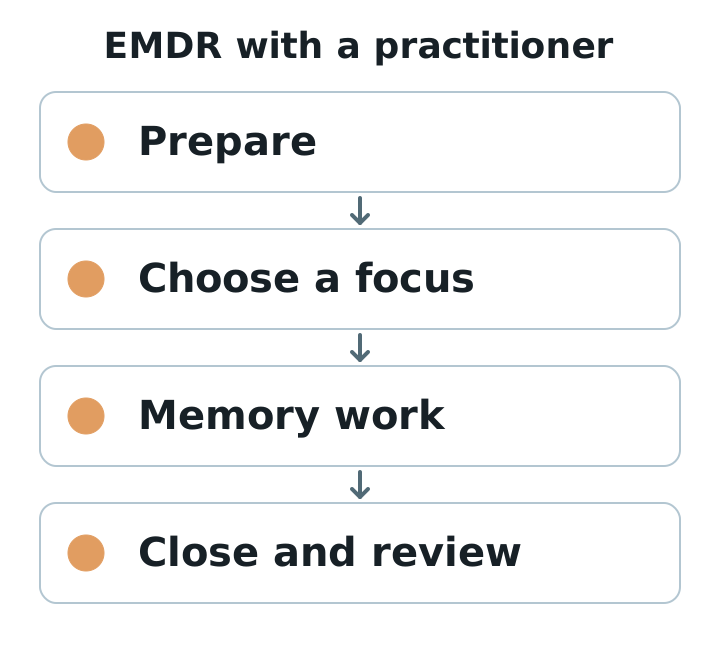
EMDR with a practitioner
A simplified view of the full EMDR process.
03
Memories can start to feel less intense
In laboratory studies, people who recalled an unpleasant memory while following eye movements or doing a similar task reported that it felt less vivid and less emotional afterwards. A review of 15 studies with 942 participants found this pattern across experiments. It's one reason researchers keep returning to EMDR. [3]
04
You don't need one clear memory to begin
Many people, especially after long or repeated experiences, can't point to one event. EMDR practitioners can work with a present trigger, a body sensation or a recurring feeling instead of a specific memory. Author Pete Walker writes that most emotional flashbacks do not have a visual or memory component. As the EMDR International Association puts it, healing "does not require conscious recollection." [5, 6]
05
Researchers can see change in the brain
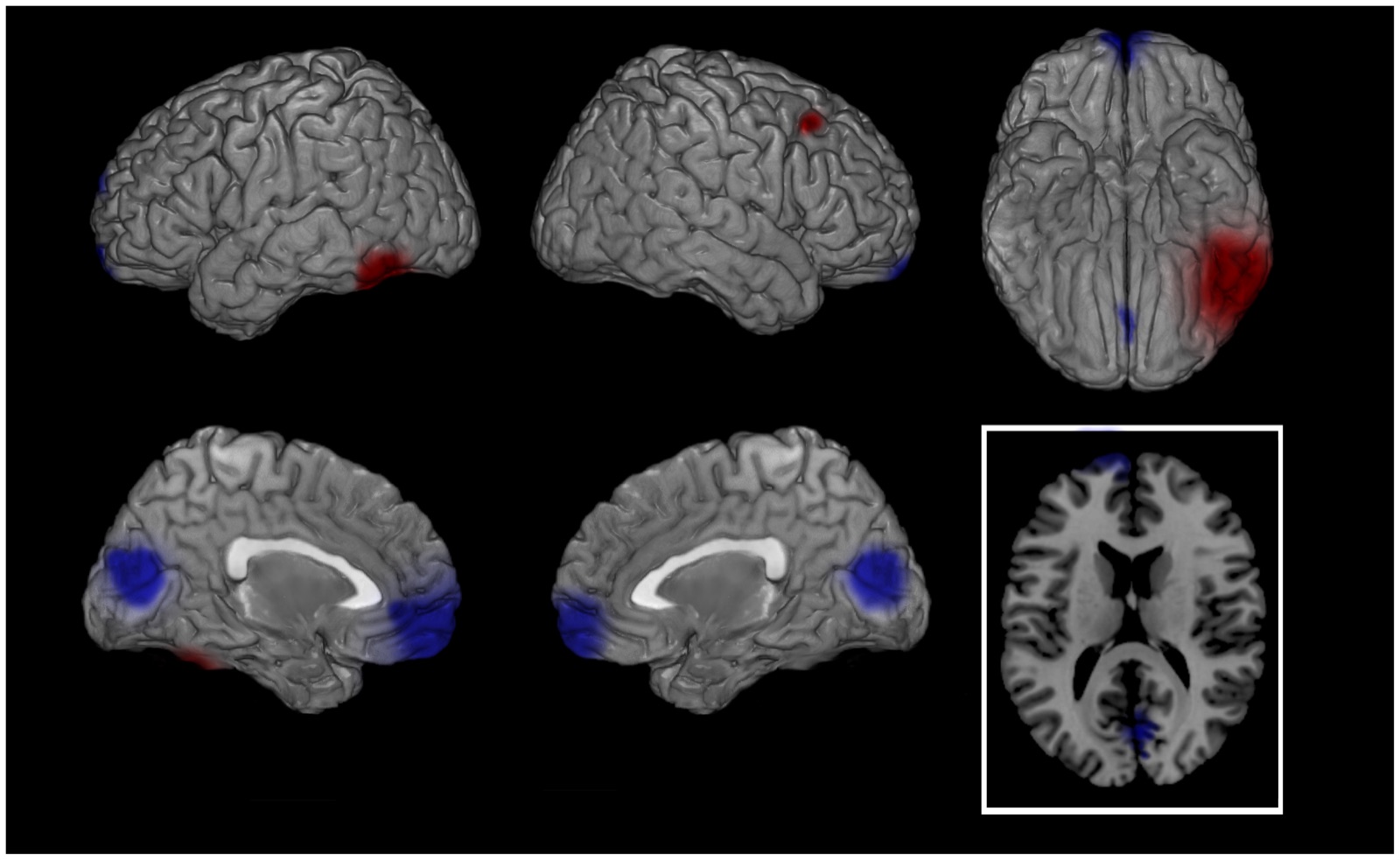
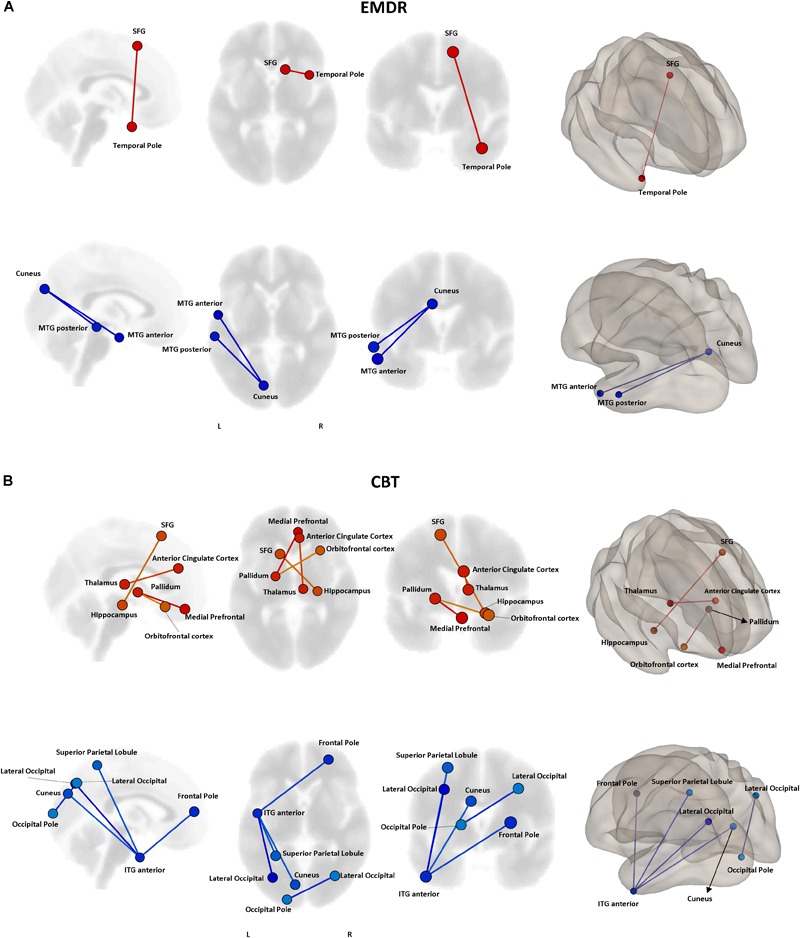
In one EEG study, brain activity during the bilateral-stimulation part of EMDR looked different in patients' last session than in their first, after the trauma had been processed. A separate study mapped changes in brain connectivity linked to symptom improvement after EMDR. [7, 8]
Want to try the bilateral-stimulation part for yourself? Mend's free session is a guided recording you can use at home, without the ad breaks.
Brain activity during bilateral stimulation: last session compared with first
EEG recorded while patients followed the bilateral stimulation, in their last session (after processing the trauma) compared with their first. Red shows higher activity, blue lower. Group results from 10 patients, not an individual scan.
Santarnecchi et al., 2019. Final sample: 17 EMDR participants and 14 participants receiving trauma-focused CBT.
Figure 2 shows statistical connections associated with symptom-score changes after EMDR and trauma-focused CBT. Panel A shows EMDR; panel B shows CBT. This is a group connectivity map, not an individual before-and-after scan.
Free guided bilateral-stimulation session, without the ad breaks. Email opens it on the homepage; updates are optional.
06
Getting EMDR is the hard part. We set out to change that
A typical EMDR course is 8 to 12 sessions, with more when needs are complex, and published private fees run from about £100 to $200 a session. Not everyone has insurance, a practitioner nearby, or the energy to travel and open up to someone new. We built a way for more people to try a structured, self-guided version of the bilateral-stimulation part, wherever they are. [9, 10, 11]
Free guided bilateral-stimulation session, without the ad breaks. Email opens it on the homepage; updates are optional.
Questions before you try it
Can I do this on my own?
EMDR is usually guided by a trained practitioner. Mend's free worksheet lays out the preparation and reflection steps so you can work through them yourself, including a plan for pausing, grounding and aftercare, then the guided bilateral-stimulation session follows. It's a self-guided way to try the bilateral-stimulation part, not a replacement for working with a practitioner.
Can the cues be taps or sounds instead of eye movements?
Yes. Bilateral stimulation can be eye movements, a light bar, handheld tappers, self-tapping or tones through headphones. [2]
Can EMDR be done by video call?
Yes. EMDR can be delivered in person or by video call, with the practitioner guiding the sets remotely. [2]
07
You can try bilateral stimulation free, today
Mend's free worksheet helps you prepare: choose one focus (a feeling or a trigger works too), plan a pause, pick grounding and plan aftercare. Then press play on a guided bilateral-stimulation session with no ad breaks, at your own pace, and reflect afterward. It's the bilateral-stimulation part, not full EMDR, and it's free: email opens the session, and updates are optional.